
English| EUR
Suggested for you
More currencies
Choose a language
Ubud Palace is not a museum piece. It remains the residence of a royal household in Gianyar, and visitors walk through courtyards still used for ceremony. This Ubud Palace dress code guide sets out what that means for what you wear, by day and at the evening performances.
Quick answer
Ubud Palace has no strictly enforced dress code, but modest clothing covering shoulders and knees is expected, as in any Balinese temple courtyard. Sarongs are not handed out at the gate, so travellers bring or buy one nearby. Entry to the grounds costs 0 IDR, and standards tighten slightly for the ticketed evening dance performances.
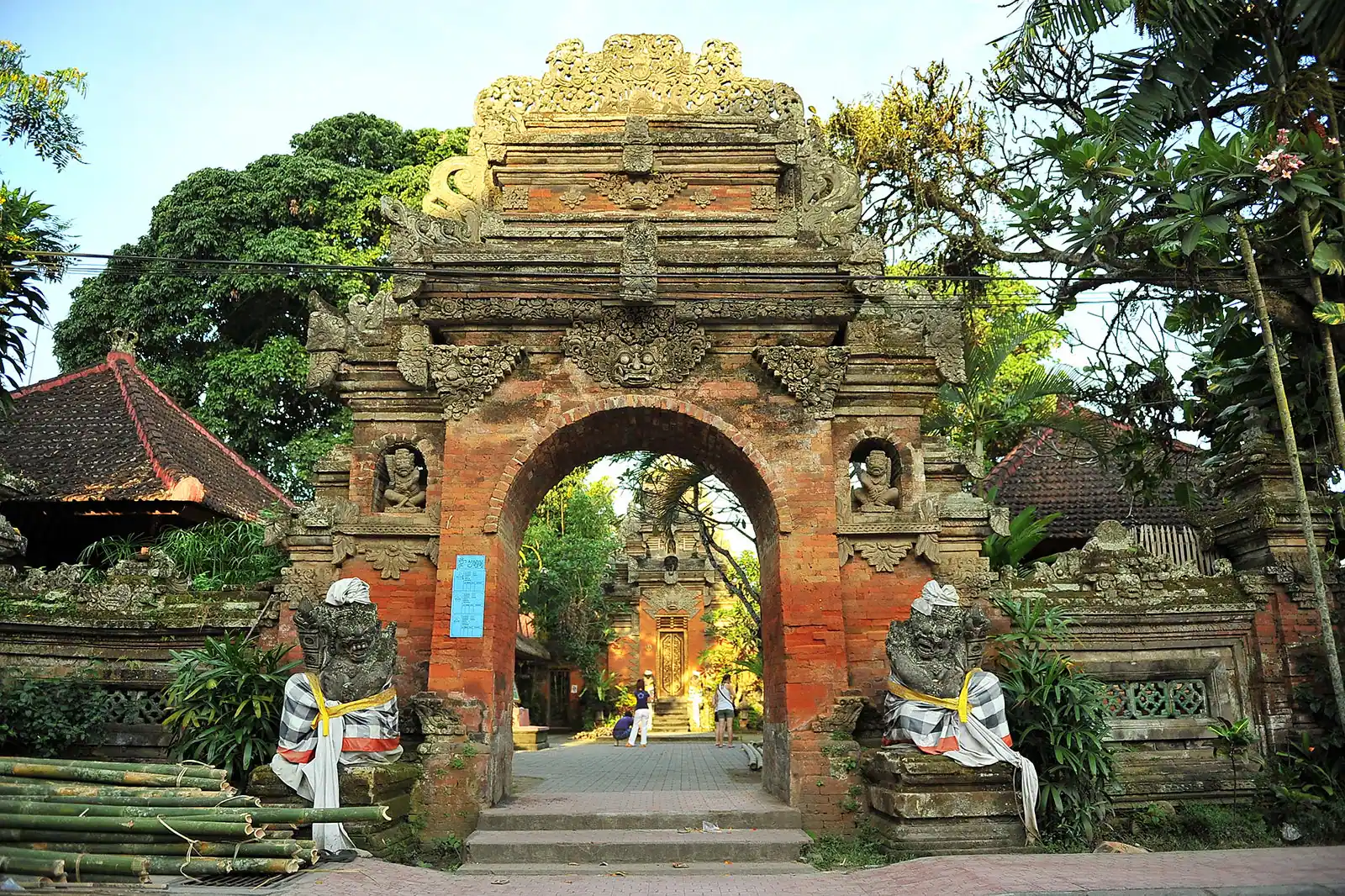
Much of what visitors photograph at Ubud Palace is barely a century old. The compound, known locally as Puri Saren Agung, was rebuilt after the 1917 earthquake that flattened much of south Bali, with carving and gate work associated with the Ubud artist I Gusti Nyoman Lempad. That rebuild matters to the Ubud Palace dress code, because the courtyards were restored as a working royal residence rather than a ruin. Members of the Ubud royal family still live behind the inner walls. The result is a site that reads as a monument and functions as a home. Offerings are laid at the candi bentar split gate each morning. Family ceremonies, cremation processions and temple odalan can close sections of the compound without notice. Balinese visitors arriving for those occasions wear kamben and a sash; foreign visitors are not held to that standard, but the expectation of covered shoulders and knees follows the same logic that governs any temple courtyard in Gianyar. Attire is read as respect, not as fashion. Evening changes the register. From around sunset the front courtyard becomes a stage: gamelan players take the bale, and Legong, Barong or Kecak troupes perform in front of stone gates lit from below. Seating is open-air and plastic-chaired; the audience dresses somewhere between temple-modest and dinner-casual. A light layer is more useful than a smart one, since the courtyard cools quickly after dark and the seats are unshaded from the day's heat. Travellers planning an Ubud Palace tour usually pair the daytime walk-through with a ticketed performance later the same day, then continue on foot to Saraswati Temple and Ubud Market — a compact circuit of Ubud landmarks. Read the Ubud Palace dress code alongside this site's performance listings and booking pages before fixing an itinerary; what to wear is rarely the constraint, but what is showing on a given night usually is.
“Attire is read as respect, not as fashion.”
Puri Saren Agung remains an active royal residence with family temple shrines, so visitors are expected to dress modestly rather than in beachwear. Covering shoulders and knees, usually with a sarong and sash, is the baseline expectation for entering the grounds.
Ubud Palace is open to the public daily throughout the week for exploring the palace grounds.
Admission fees for Ubud Palace depend on whether you are visiting the palace grounds during the day or attending an evening cultural performance.
Verdict: A typical visitor pays 0 IDR for daytime palace access, while evening cultural performances require a separately purchased ticket.
Everything you need to know about ubud palace dress code
While there is no formal ubud palace dress code enforced for general grounds access, it is a place of cultural significance. Visitors are expected to dress modestly out of respect for the site.
The best approach for your visit to these Balinese landmarks is to wear clothing that covers your shoulders and knees. Light, breathable fabrics are recommended given the tropical climate of the Ubud region.
While not strictly enforced in every corner of the grounds, wearing a sarong or scarf to cover your legs is widely considered the respectful standard for Balinese cultural sites. Following the general ubud palace dress code by covering up ensures you remain comfortable in traditional settings.
Local customs generally suggest using a sarong when entering religious or royal spaces. Many visitors find that adhering to the traditional ubud palace dress code helps them feel more connected to the heritage of the Puri Saren Agung.
There is no specific formal wear required for guests attending evening traditional dance performances. Most attendees choose smart-casual attire, keeping the general ubud palace dress code for respectful visiting in mind.
Children are generally expected to follow the same modest guidelines as adults when visiting the site. Ensuring they wear clothing that covers their shoulders and knees is appropriate for the historic courtyard environment.
If you enter any of the internal shrines or sacred areas within the palace complex, you must wear a sarong and sash. Respecting these local norms helps maintain the sanctity of the royal residence.