Ubud Art Market
2 min walk
Located directly across from the palace, this market offers traditional crafts and textiles perfect for daytime browsing before your evening show.

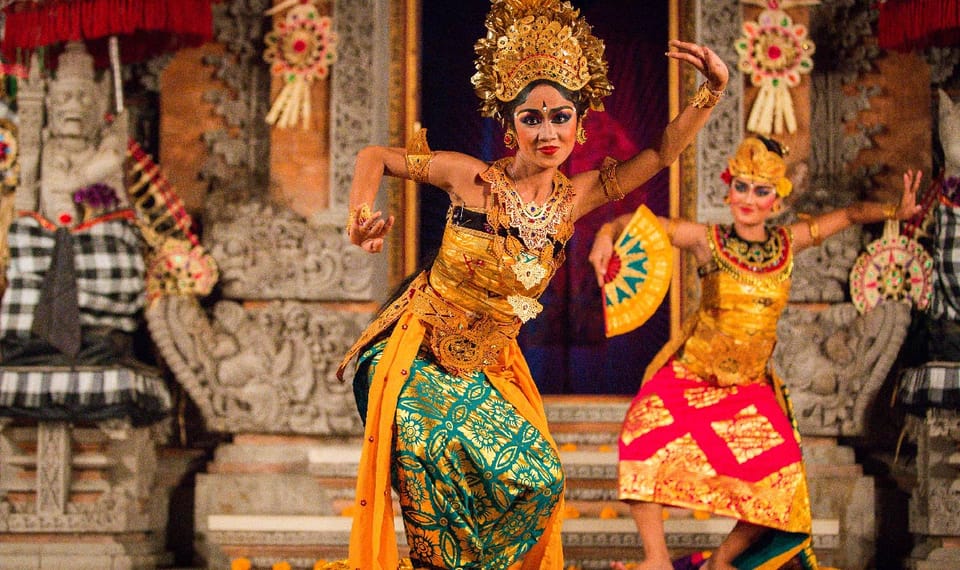
Puri Saren Agung sits at the busiest crossroads in central Ubud, and by dusk its outer courtyard turns into an open-air stage backed by carved stone gates. Most visitors arrive knowing a performance happens most evenings but not which one, or how the daytime palace relates to the ticketed night. This ubud palace dance show schedule guide sets out how the programme is structured and what it means for your evening.
Quick answer
Ubud Palace grounds open daily from 07:00 to 18:00 with free entry at 0 IDR, and evening dance performances run after those daytime hours on a separate ticket. The programme rotates by night of the week, typically featuring Legong, Barong or Kecak-style repertoire staged by rotating village troupes. Titles and start times vary, so confirm the current listing before committing to a night.
Puri Saren Agung is not a museum. It remains the residence of the Ubud royal family, which is why the public sees only the forecourt and its carved paras-stone gateways, and why the same flagstones that carry tourists by day carry gamelan players by night. The palace was rebuilt after the 1917 earthquake, and much of the relief work visible around the candi bentar split gate is attributed to the sculptor I Gusti Nyoman Lempad, whose hand shaped a good deal of twentieth-century Ubud. That double life — royal compound and performance venue — is the single fact that explains the whole ubud palace dance show schedule. What a visitor is actually dealing with is two different places sharing one address on Jalan Raya Ubud. The daytime palace is a short, free, self-guided walk through a compound of pavilions, frangipani trees and shrine platforms; it closes in the early evening. The night palace is a ticketed seated event in the same forecourt, run not by the palace itself but by village sekaa — organised troupes from surrounding banjar who hold a standing night in the rotation. Different troupes bring different repertoire. That is why the answer to "what is on tonight" is a title, not a fixed weekly formula, and why printed listings around town sometimes disagree with each other. The repertoire itself follows recognisable forms. Legong Keraton, with its finger-flicked precision and darting eyes, is the classical court style most associated with the palace stage. Barong and Rangda pieces stage the older contest between order and chaos. Kecak, performed by a seated male chorus rather than gamelan, is the outlier that needs no orchestra at all. A Balinese dance performance at Ubud Palace typically runs somewhere over an hour, with a printed synopsis handed out so audiences can follow the narrative. What to do with all this is straightforward. Treat the daytime visit and the evening performance as separate plans rather than one continuous outing, since a gap sits between them by design. Decide which repertoire you want before you decide which night you attend — the troupe rotation, not convenience, should drive the choice. Then check the current programme close to your date, because the ubud palace dance show schedule is a living roster of village groups, not a fixed timetable carved into the gate.
“The palace leads two lives at one address: a free royal forecourt by day, a ticketed stage by night.”
Ubud Palace is open to the public daily. These hours apply to general entry to the palace grounds.
Access to the Ubud Palace grounds is available to visitors at no cost during daily operating hours. Attending an evening dance performance, however, requires a separate ticket purchased specifically for the event.
Verdict: Adults pay 0 IDR to view the palace grounds, while evening dance show tickets are priced at 100,000 IDR per person.
This procedure takes you from arriving at the palace grounds in the afternoon to being seated as the evening performance begins, and runs about three to four hours end to end including a break for dinner. Most of that time is flexible; only the last hour is fixed by the seating rush.
Head to Jalan Raya Ubud No.8, Ubud, Gianyar, Bali 80571, Indonesia, on the corner opposite Ubud Market. The gated courtyard set back from the road is the entrance people miss — the ornate carved gateway facing the main junction is a photo backdrop, not the way in.
Leave cars in the Ubud Market lot or a side-street lot and walk the last few minutes. Drivers who aim for the palace gate itself get stuck in the Jalan Raya Ubud bottleneck that builds through the afternoon.
Entry to the palace grounds is free, so use the afternoon to see the courtyards, pavilions and family shrines while they are quiet. The inner residential compound stays closed to visitors — stick to the marked open courtyards.
Check which dance is scheduled for your date and secure a separate ticket for it through the booking pages, since palace entry does not include the show. Programmes rotate by night, so verify the date rather than assuming.
Use the warungs along Jalan Raya Ubud and Monkey Forest Road for an early dinner. Restaurants closest to the palace fill up right before showtime, and leaving it late costs you your seat choice.
Come back to the performance courtyard well before the start time — seating is unreserved plastic chairs on flat ground. Arriving at the advertised start leaves only the back rows, where the gamelan blocks sightlines.
Sit centrally for the clearest view of the gateway steps the dancers use as entrances. Bring insect repellent and a light layer; the open courtyard cools once the sun drops and there is no cover if rain moves in.
For the best balance of palace sightseeing and securing preferred seating for an evening dance performance, aim to arrive during the designated best arrival window of 07:00–09:00. Visiting during this period allows you to explore the grounds while they are quiet before returning later for the evening events.
—
Quiet palace grounds allow for detailed viewing before peak tourism hours begin.
Dry, 24°C–32°C
Clear skies facilitate comfortable outdoor movement around the palace complex.
Humid, 23°C–31°C
Frequent afternoon rain may impact outdoor transit to the evening show venue.
Verdict: The best time to visit is during the dry season months of April or October, arriving between 07:00–09:00 to enjoy the palace grounds before the evening performance.
Ubud Palace is centrally located, making it easy to combine your evening dance show visit with surrounding cultural and natural landmarks. These nearby sites allow for a full day of exploration before the performance begins.
2 min walk
Located directly across from the palace, this market offers traditional crafts and textiles perfect for daytime browsing before your evening show.
5 min walk
This water temple features lotus ponds and Balinese architecture, providing a quiet atmosphere that contrasts well with the evening dance festivities.
15 min walk
This protected forest reserve houses temple structures and macaques, serving as a nature-focused stop to complete your Ubud cultural itinerary.
2 min walk
A hub for local artisans, this area provides context to the craftsmanship often displayed in the costumes and masks used during dance performances.
Everything you need to know about ubud palace dance show schedule
The ubud palace dance show schedule typically features performances starting in the evening, around 19:30. These cultural events showcase traditional legong or barong dances within the historic courtyard setting.
While you can often secure your ubud palace dance show schedule tickets at the entrance, booking in advance through authorized platforms is recommended to ensure availability. This helps you avoid long queues before the performance begins.
Entry to the palace grounds is 0 IDR during regular opening hours. However, a separate ticket is required if you wish to attend the evening dance shows held on the premises.
To secure a good seat for the ubud palace dance show schedule, it is advisable to arrive at least 30 to 45 minutes before the start time. Early arrival allows you to explore the ornate architecture and intricate stone carvings of the landmark before the show.
Yes, children are welcome to attend these traditional performances. It is a family-friendly cultural experience, though parents should ensure young children remain quiet during the storytelling segments of the show.
When planning your trip to this Ubud landmark, consider visiting during the morning between 07:00 and 09:00 to avoid peak crowds. You can then return in the evening to enjoy the scheduled performances in the cool night air.